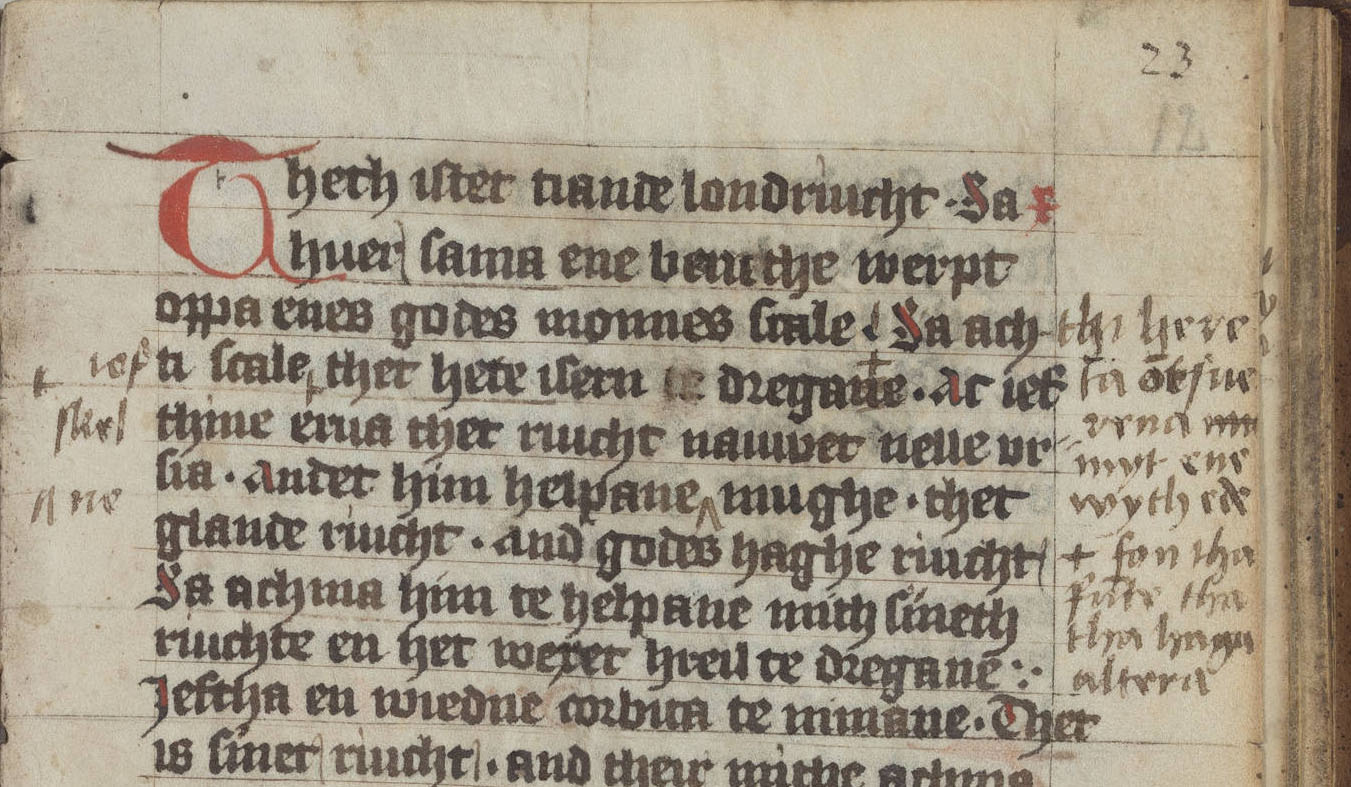
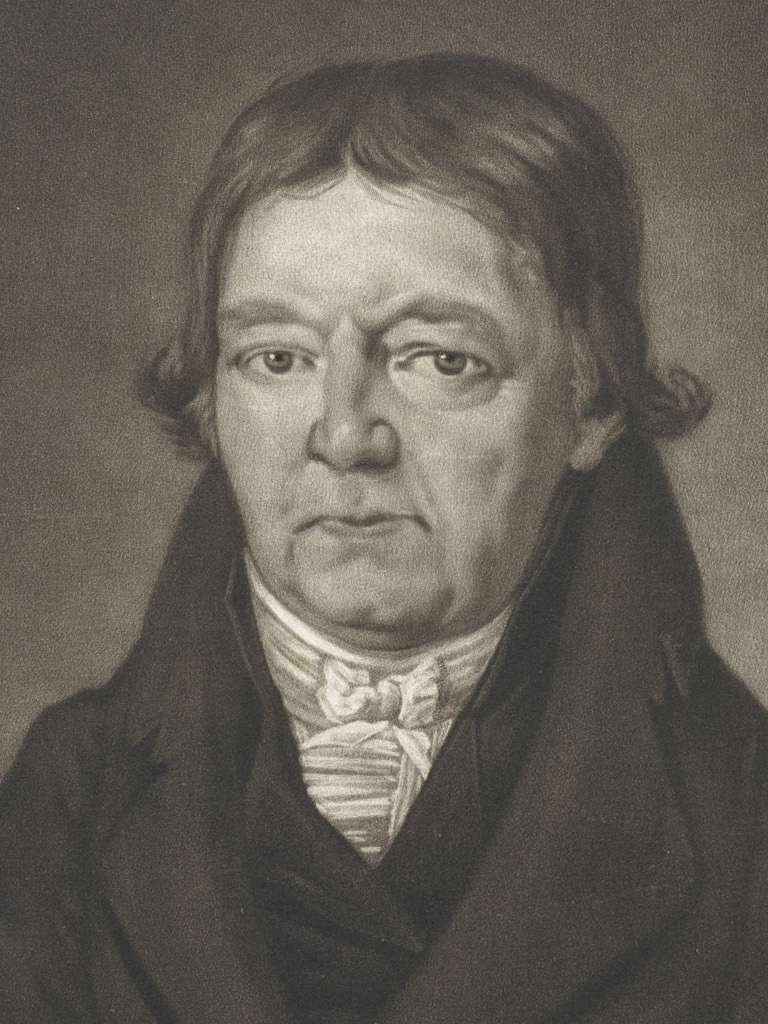
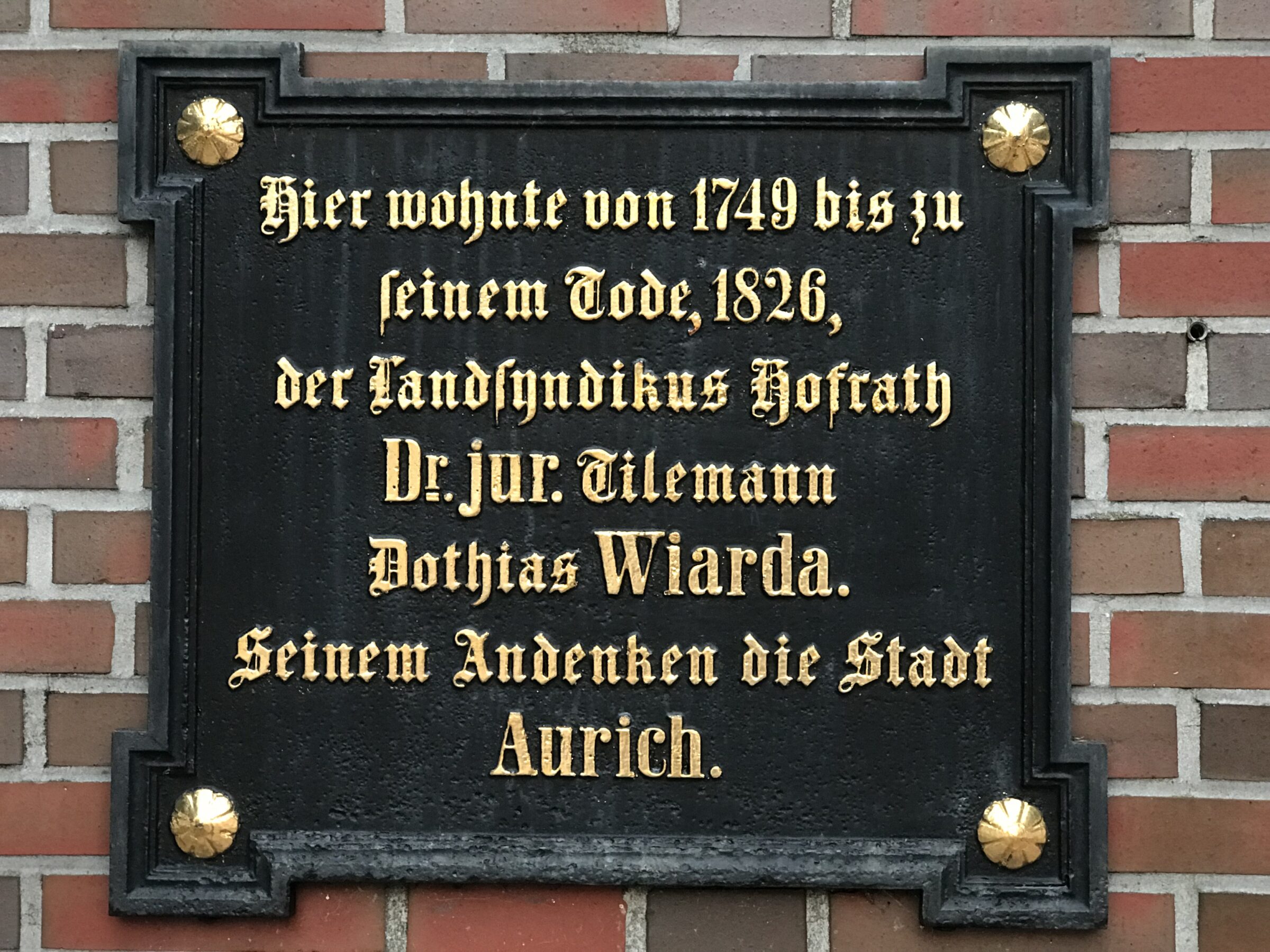
This address at Marktplatz 24 in Aurich was once home to Tileman Dothias Wiarda (Emden 1746–Aurich 1826). From here, he first worked as a lawyer before becoming Landsyndikus: the legal representative for the East Frisian Landscape. Wiarda is the first-known owner of the so-called First Emsingo Codex, a manuscript book with law texts in Old Frisian. Considering his work as legal professional, his interest in this book is unsurprising. In fact, in Wiarda’s own time, Old Frisian laws still were at the core of the legal system in East Frisia.
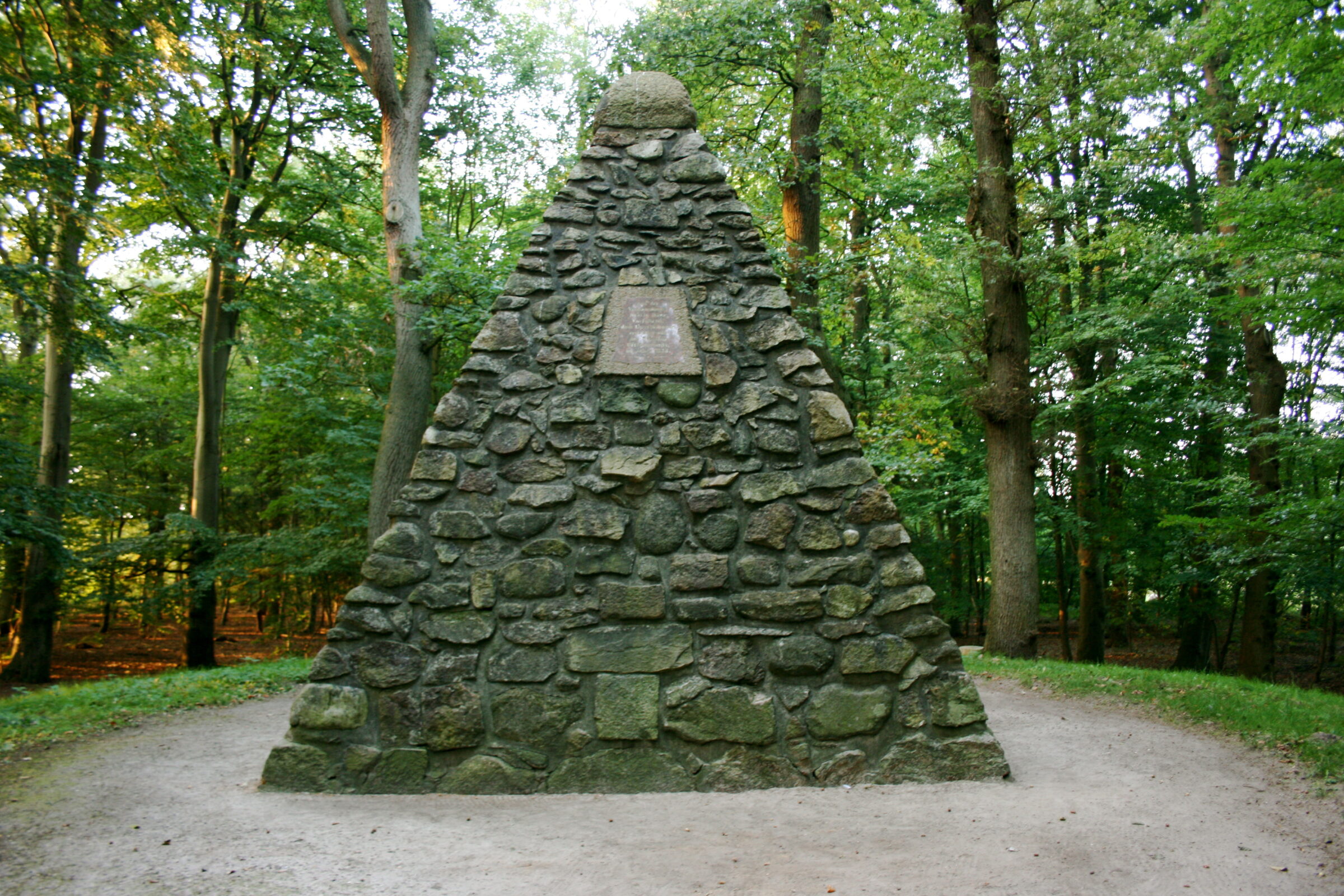
His personal connection to Aurich undoubtedly also factored in Wiarda’s interests. One line from the First Emsingo Codex translates to “The thing shall be held with the seven representatives from the Seven Sealands at the Upstalsboom, on the Tuesday in the week of Pentecost, in accordance with the right of all Frisians.” The thing was a Germanic assembly of people during which law was spoken. In Frisia, these assemblies were attended by locally elected representatives from all Frisian Sealands. The meeting place was at the so-called Upstalsboom, probably at a location near Aurich.
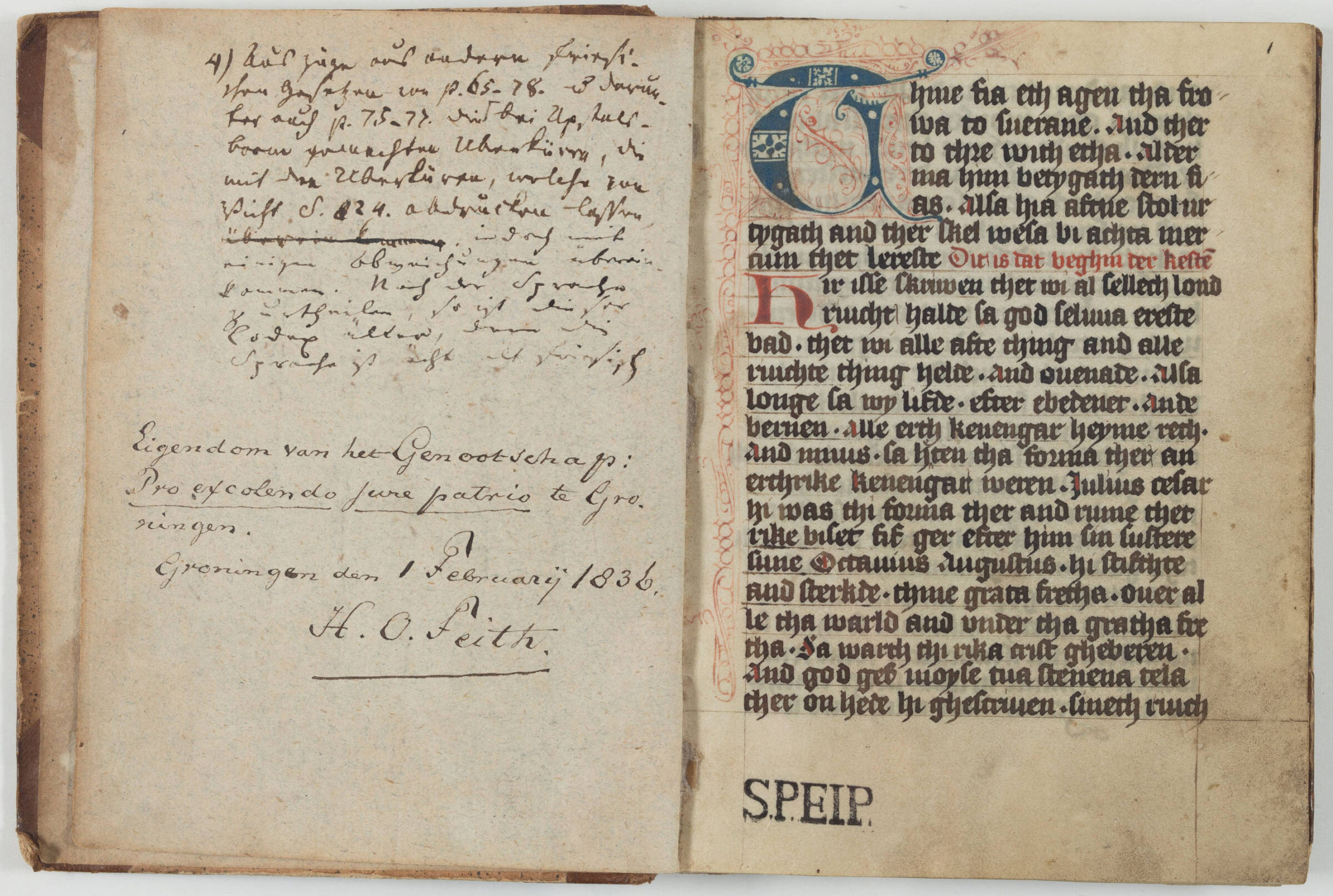
Wiarda’s ideas were well received in the nineteenth century and his publications about the Old Frisian manuscripts, language, and history have been indispensable for academic research into the Frisian language and lands. He introduced existing sources to a larger audience and some texts only survive in the shape of Wiarda’s transcriptions. Wiarda was a member of a Groningen-based society called Pro Excolendo Iure Patrio, whose members collected and studied medieval Germanic laws from the Northern Netherlands. Like several other members of Pro Excolendo, Wiarda owned multiple Old Frisian manuscripts. This includes the Second Emsingo Codex, which is also kept at the University of Groningen Library.
The First Emsingo Codex was probably written in the first half of the fifteenth century. The Second Emsingo Codex dates from somewhere between 1448 and 1500. Despite their age difference, the manuscripts look nearly identical: they are the same size, they were written in comparable styles, and they are bound in similar eighteenth-century bindings. Their known provenance is identical. However, their contents differ, and the Second Codex was likely intended to be used alongside the First Codex. Unfortunately, it remains a mystery where, when, and how Wiarda obtained these codices.
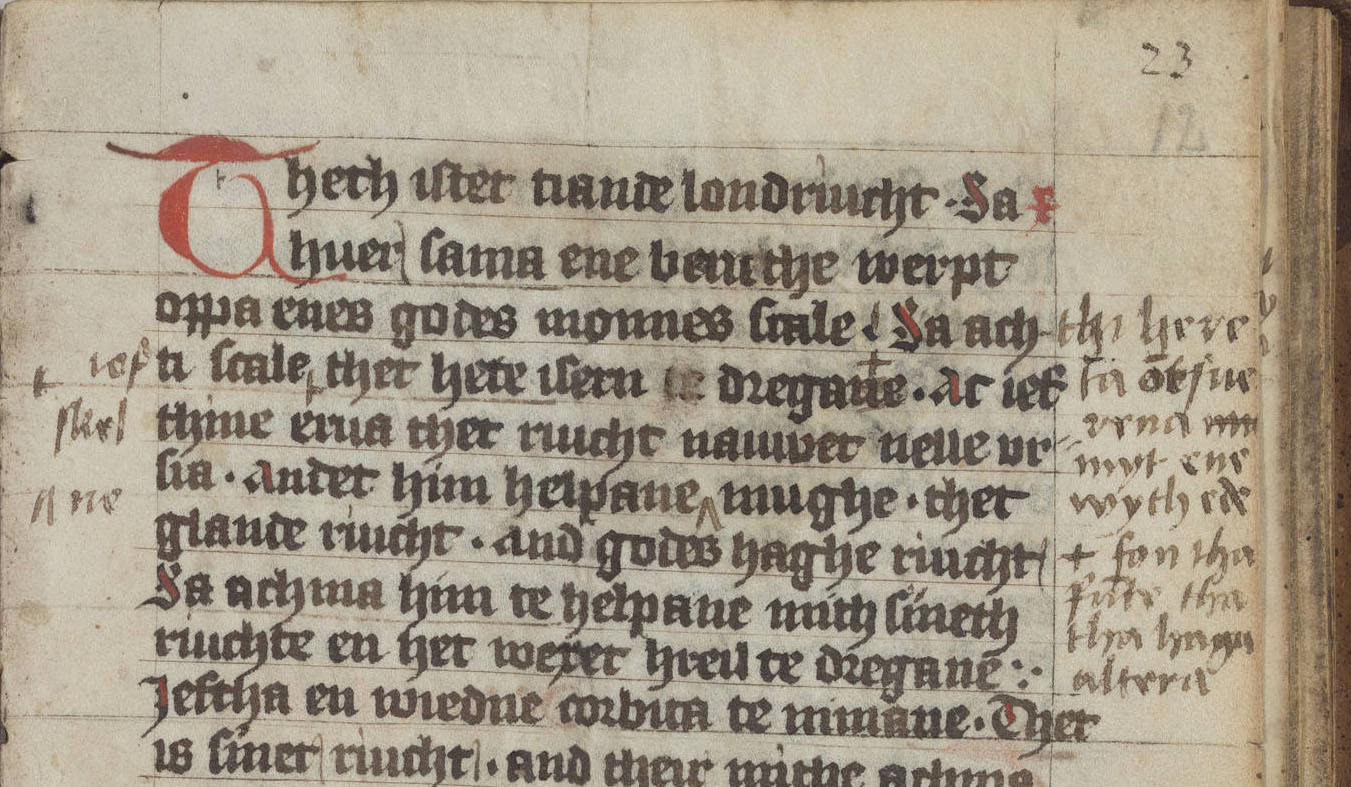
In terms of its contents, the First Emsingo Codex is a typical example of Old Frisian law manuscripts. It is a collection of shorter texts. Some of these texts occur in manuscripts from throughout medieval Frisia and because of this are called Pan-Frisian laws Among these are the two oldest and most important Old Frisian law texts, the so-called Seventeen Statutes and the Twenty-Four Land Laws. Together they form the core principles of the Frisian Freedom, including the Frisians’ right to have their own legal system and the right to substitute corporal punishment with monetary penalties. Other texts were local in nature and concerned one of the Frisian Sealands. The Emsingo Codices were named after one of these lands. Although no locations are named in the First Codex, one of its texts corresponds to a text in the Second Codex where it is called the Emsingo Penalty Register. This register consists of a list of criminal offences and their monetary compensations.
The subject of law allows us to return to the people behind the manuscripts. The makers and owners preceding Wiarda are unknown. They did, however, leave notes in the margins. This shows that the manuscripts were used intensively in the application of Frisian law.
When Wiarda’s books were auctioned after his death, the society Pro Excolendo Iure Patrio bought the First and Second Emsingo Codices. Soon after, they were given on permanent loan to the University of Groningen Library, alongside the remainder of the Pro Excolendo-collection – including the manuscripts discussed in the Stories of Frisia “Ommelanden Upheaval” and “Elema’s Sachsenspiegel.”
Author: Nate Berger